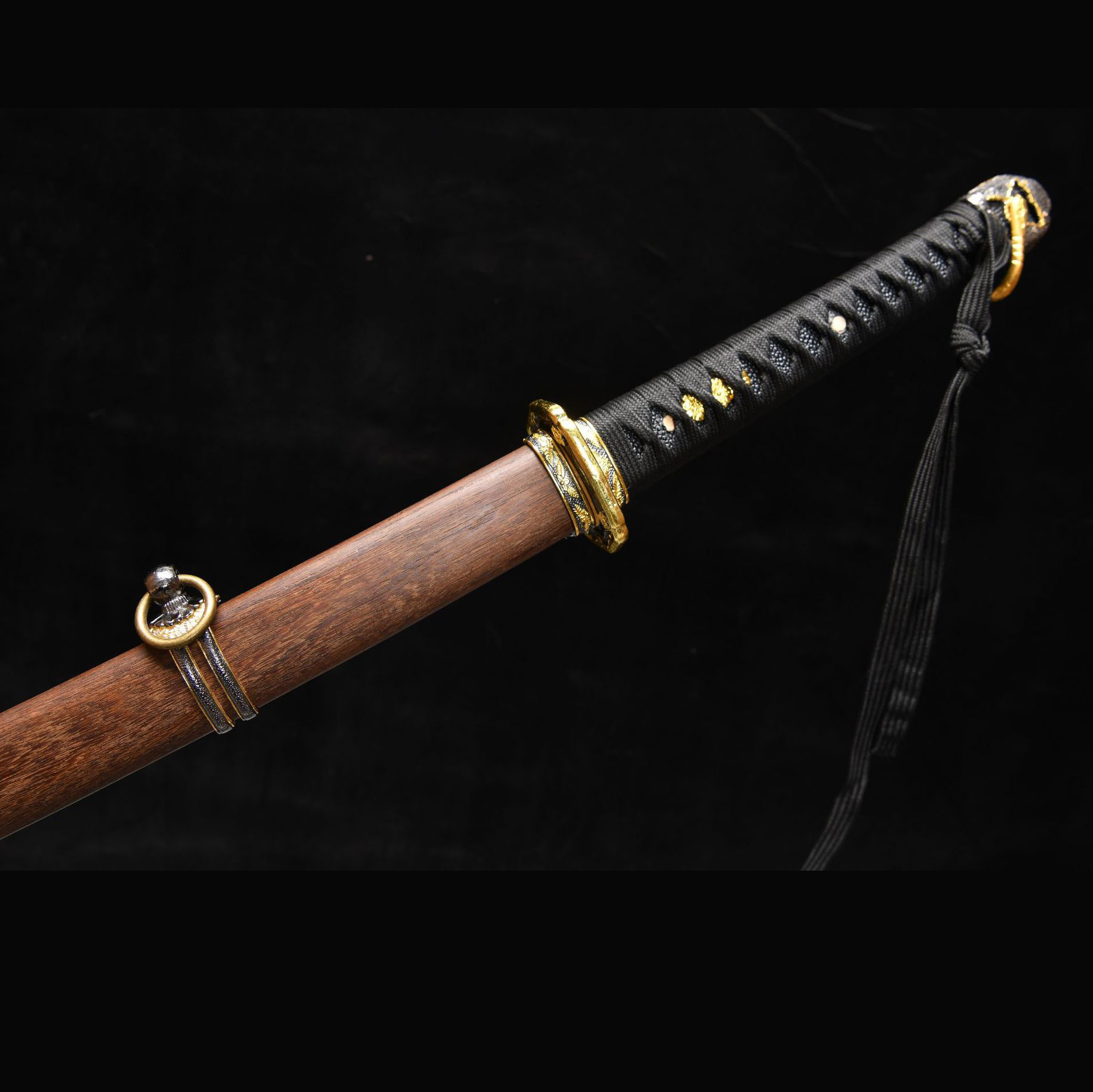
The Soul of Japanese Sword Craft: Materials, Tradition, and Five Elements Harmony
In the quiet elegance of Japanese traditional craftsmanship, the true essence of samurai sword-inspired art collectibles lies not in their form alone, but in the soul woven through their materials, the unbroken thread of tradition, and the profound harmony of the Five Elements. These pieces are more than decorative objects—they are living expressions of balance, patience, and cultural depth. For collectors and admirers of Eastern wisdom, understanding this soul offers a deeper appreciation of why such art continues to inspire across centuries.
The Heart of the Material: Tamahagane and Natural Origins
At the core of every authentic Japanese sword craft lies tamahagane—the “jewel steel.” This rare material begins with satetsu, iron-rich sand gathered from specific riverbeds in Japan, combined with charcoal in the ancient tatara furnace. For days, the fire burns at extreme temperatures, slowly transforming humble earth into precious lumps of high-carbon steel.
What makes tamahagane extraordinary is not uniformity, but its natural imperfection. The uneven distribution of carbon becomes the foundation for breathtaking visual beauty later in the process. Artisans select and combine pieces with care, then fold, hammer, and re-forge them repeatedly—sometimes creating thousands of delicate layers. This folding process purifies the steel while revealing hada, the mesmerizing surface grain that resembles flowing water, wood patterns, or distant mountains. Each hada is utterly unique, a fingerprint left by nature, time, and human hands.
In this way, tamahagane carries a quiet spiritual quality: it is born from the earth, shaped by fire, and refined through relentless patience—qualities that echo the deeper values of Japanese aesthetics.
Tradition as Living Memory: The Unbroken Chain of Craft
Japanese sword craftsmanship is not a lost art; it is a living tradition passed directly from master to apprentice for over a thousand years. Every step—from selecting satetsu, building the tatara, folding the steel, to the final polishing—is performed with rituals of respect and exacting precision.
One of the most poetic moments is yaki-ire, the differential hardening. The artisan coats the steel with a carefully applied layer of clay—thicker in some areas, thinner in others—then heats it to glowing red and quenches it in water. The varying cooling rates create hamon, the graceful, wave-like line that dances across the surface like mist over a river or clouds drifting across a moonlit sky. This is not decoration added later; it is the natural result of fire meeting water, chaos meeting control.
Through these inherited techniques, each art collectible becomes a continuation of history. When you place one in your home or office, you are not merely displaying an object—you are holding a thread in an unbroken chain that stretches back to ancient Japan.
The Five Elements Harmony: A Philosophical Foundation
Perhaps the deepest layer of meaning lies in how the entire creation process mirrors the Five Elements (Wu Xing) philosophy—Wood, Fire, Earth, Metal, and Water—in perfect balance and mutual generation.
- Wood: the charcoal that fuels the furnace, representing growth and vitality.
- Fire: the intense heat of forging, symbolizing transformation and energy.
- Earth: the clay of the tatara furnace and the satetsu itself, providing grounding and stability.
- Metal: the refined steel that emerges, embodying strength refined into elegance.
- Water: the quenching that brings form and calm, completing the cycle.
This cycle of generation (Wood feeds Fire, Fire creates Earth/ash, Earth bears Metal, Metal collects Water, Water nourishes Wood) is not accidental. Traditional artisans intuitively worked within this worldview, creating objects that embody harmony rather than dominance. For many modern collectors, this makes these art pieces powerful symbols of personal balance, renewal, and positive flow—especially meaningful as gifts for new beginnings, such as the start of a new year.
Bringing the Soul Home: Modern Collectibles Rooted in Tradition
While original tamahagane pieces from historical periods are rare and costly, today’s high-quality decorative collectibles use carefully chosen modern steels (such as 1060 or 1095 high-carbon steel, or ornamental stainless grades) that faithfully recreate the classic hada and hamon patterns. These materials offer excellent longevity and ease of care while preserving the visual and spiritual essence of the tradition.
Simple maintenance—gentle wiping, occasional protective oil, and protection from direct sun or moisture—keeps the beauty alive for generations.
Closing: An Invitation to Connect with the Soul
The soul of Japanese sword craft is found in materials born from nature, traditions carried across centuries, and the quiet philosophy of Five Elements harmony. It invites us to pause, to appreciate balance, and to bring a piece of timeless wisdom into our daily lives.
If you feel drawn to this beauty and meaning, consider welcoming an entry-level art collectible into your space. Our recommended 179 USD model captures the classic textures, hamon elegance, and Five Elements spirit using premium materials—perfect as a thoughtful New Year gift or personal symbol of harmony. Right now, enjoy 20% off your first piece (≈143 USD), with global free shipping and lifetime care service included.
Click here to explore and let this piece of ancient soul become a meaningful companion on your journey through 2026.